
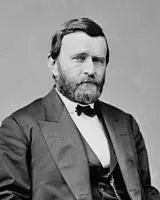
Ulysses S. Grant
March 4, 1869 – March 4, 1877
18
Ulysses S. Grant: The 18th President of the United States
Ulysses S. Grant was the 18th President of the United States, serving two terms from 1869 to 1877. Born on April 27, 1822, in Point Pleasant, Ohio, Grant rose to prominence as a general during the American Civil War and was known for his leadership and strategy skills. Despite facing many controversies during his presidency, Grant remains an important figure in American history and is widely regarded as one of the country’s greatest military leaders.
Before entering politics, Grant worked in various professions, including as a farmer and a leather goods clerk. He later attended the United States Military Academy at West Point, where he graduated 21st in his class and was commissioned as a second lieutenant in the United States Army.
At the outbreak of the American Civil War in 1861, Grant was serving in the Army in Missouri. He quickly rose through the ranks and became a general in the Union Army in 1864. His most famous victories include the Battle of Shiloh and the Siege of Vicksburg, both of which were crucial in securing control of the Mississippi River for the Union.
Grant’s leadership and strategy skills earned him the nickname “Unconditional Surrender Grant,” and he was appointed commander of all Union armies by President Abraham Lincoln in March 1864. He went on to lead the Union to victory over the Confederacy, and was present at General Robert E. Lee’s surrender at Appomattox Court House in April 1865.
After the Civil War, Grant remained in the Army for a short time before resigning in 1868. He later ran for the presidency as a Republican and won the election in 1868, defeating Democrat Horatio Seymour. He was reelected in 1872, defeating Liberal Republican nominee Horace Greeley.
Presidency
During his presidency, Grant faced many challenges, including a struggling economy, corruption within his administration, and tensions with Native American tribes. Despite these challenges, he made progress in several areas, including the rebuilding of the South and the protection of African American rights.
One of Grant’s most notable achievements was the passage of the 15th Amendment to the United States Constitution, which granted African American men the right to vote. He also signed the Ku Klux Klan Act of 1871, which gave the federal government the power to prosecute the Klan and other white supremacist groups that were terrorizing African Americans in the South.
Grant also made efforts to improve relations with Native American tribes and signed several treaties with them during his presidency. However, his policies towards Native Americans were criticized for being too harsh and for forcing them onto reservations.
Despite his efforts to address these challenges, Grant’s presidency was plagued by corruption and scandals, including the Whiskey Ring scandal and the Credit Mobilier scandal. These scandals, along with a struggling economy, hurt his popularity and led to his party losing control of the House of Representatives in the midterm elections of 1874.
After leaving office, Grant traveled the world and wrote his memoirs, which were published just before his death in 1885. He died of throat cancer at the age of 63.