
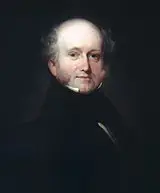
Martin Van Buren
March 4, 1837 – March 4, 1841
08
Martin Van Buren: The 8th President of the United States
Martin Van Buren was the 8th President of the United States, serving from 1837 to 1841. He was born on December 5, 1782, in Kinderhook, New York, and died on July 24, 1862, in Kinderhook, New York. Van Buren was the first President who was born a citizen of the United States and not a British subject. He is also known for being the last President to have served in the War of 1812.
Early Life and Career
Van Buren was born to Dutch American parents and was raised in a Dutch-speaking community. He attended local schools and went on to study law at New York University. He was admitted to the bar in 1803 and began practicing law in Kinderhook. In 1807, Van Buren was elected to the New York State Senate, where he quickly rose to prominence as a strong advocate for the Democratic-Republican Party. He went on to serve as the U.S. Senator from New York from 1821 to 1828.
In 1828, Van Buren was elected as the Governor of New York. He served in this position for only one term before being elected as Vice President of the United States under President Andrew Jackson. Van Buren played a key role in supporting Jackson’s policies and initiatives, and he was widely seen as one of Jackson’s closest advisors and confidantes.
Presidency
In 1836, Van Buren was elected as the 8th President of the United States. He took office on March 4, 1837, and immediately faced several challenges, including a financial crisis that had been brewing for several years. The crisis was caused by a combination of factors, including a sharp decrease in the value of land and a severe economic depression that had affected much of the country. Van Buren’s efforts to address the crisis were largely unsuccessful, and he was widely criticized for his handling of the situation.
One of Van Buren’s most significant accomplishments as President was his efforts to preserve the Union. He was a strong advocate for states’ rights and believed that the federal government should play a limited role in the affairs of the states. He also worked to strengthen the powers of the presidency and to establish a more effective system of executive branch governance. Despite these efforts, however, Van Buren’s presidency was marked by significant opposition and criticism, and he faced significant challenges in his efforts to govern the country effectively.
Later Life and Legacy
After leaving office in 1841, Van Buren retired to Kinderhook, where he lived for the rest of his life. He remained active in politics, however, and he made several unsuccessful attempts to regain the presidency, including running for the Democratic nomination in 1844 and 1848. Despite these setbacks, Van Buren was widely respected for his political acumen and his contributions to the development of the Democratic Party.