
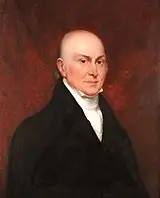
John Quincy Adams
March 4, 1825 – March 4, 1829
06
John Quincy Adams: The Statesman President
John Quincy Adams was the sixth President of the United States, serving one term from 1825 to 1829. He was born on July 11, 1767, in Braintree, Massachusetts and went on to become one of the most important political figures in American history. Adams was the son of John Adams, the second President of the United States, and Abigail Adams, one of the most influential women of the American Revolution. He was educated in the United States and Europe and was a talented diplomat and statesman from a young age.
Early Life and Career
Adams was a precocious and gifted young man, and he was sent to Europe as a diplomat by the Continental Congress at the age of 14. He served as a secretary to the American legation in the Netherlands and later in Portugal and Germany. In 1794, Adams was appointed as Minister to the Netherlands, and in 1797 he was appointed as Minister to Prussia. He served as a diplomat in Europe for more than a decade, becoming one of the most respected American diplomats of his time.
In 1802, Adams was elected to the U.S. Senate, and he served in this capacity until 1808. He was then appointed as Minister to Russia by President Thomas Jefferson and served in this position until 1814. In 1817, Adams was appointed as Secretary of State by President James Monroe, and he served in this capacity until 1825. In 1824, Adams was elected as the sixth President of the United States.
Presidency
Adams’ presidency was marked by controversy and conflict, as he faced opposition from both political parties. Despite this, he was an effective and dedicated statesman who worked to advance American interests both at home and abroad. During his presidency, Adams supported the construction of roads, canals, and other infrastructure projects to promote economic growth and improve the lives of Americans. He also worked to promote American commerce and industry, negotiating trade agreements with countries around the world and supporting the development of American industry and agriculture.
Adams was also a strong advocate for human rights and worked to promote abolition and end slavery. He supported the American Colonization Society, which aimed to colonize freed slaves in Africa, and he worked to end the slave trade in the United States. Despite facing significant opposition, Adams was a determined and passionate advocate for human rights, and his legacy in this area continues to inspire activists and leaders today.
Retirement and Legacy
After leaving the presidency, Adams retired from public life and returned to his home in Massachusetts. However, he remained a vocal and active participant in American politics, and he was elected to the U.S. House of Representatives in 1830. He served in the House for 17 years, during which time he continued to advocate for human rights and other important causes. Adams died on February 23, 1848, at the age of 80 and was widely mourned as one of the greatest statesmen of his time.