
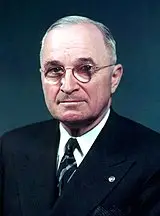
Harry S. Truman
April 12, 1945 – January 20, 1953
33
Harry S. Truman: The 33rd President of the United States
Harry S. Truman was the 33rd President of the United States, serving from 1945 to 1953. He was known for his straightforward and plain-spoken style, as well as for his leadership during some of the most challenging times in American history. This article takes a closer look at the life and legacy of this iconic leader.
Early Life and Career
Harry S. Truman was born in Lamar, Missouri in 1884. He grew up on a farm in Missouri, and he was educated in the public school system. He worked as a farmer and a store clerk before joining the Army National Guard during World War I. He served as a captain in France, and he was awarded several commendations for bravery in battle.
After the war, Truman returned to Missouri and entered politics. He was elected to the United States Senate in 1934, and he served as the Chairman of the Senate Committee on Military Affairs during World War II. He was known for his strong stance on national defense, and his efforts helped to ensure that the country was well-prepared for the challenges of the war.
Presidency
Truman became President of the United States in April of 1945, following the death of President Franklin D. Roosevelt. He was faced with a number of challenges, including the end of World War II, the beginning of the Cold War, and the dawn of the nuclear age. He rose to these challenges with a combination of determination, courage, and leadership.
Truman is perhaps best known for his decision to use atomic bombs to end the war with Japan. The bombings of Hiroshima and Nagasaki were controversial at the time, but Truman felt that they were necessary to bring a swift end to the conflict and save American lives. He later expressed regret for the loss of life, but he believed that his decision was the right one in the circumstances.
Truman also played a key role in the establishment of the United States as a global superpower. He helped to rebuild Europe through the Marshall Plan, and he helped to establish the North Atlantic Treaty Organization (NATO) to provide for the collective defense of the Western world. He also took a tough stance against the Soviet Union, and his administration is credited with beginning the policy of containment that would define American foreign policy for the next several decades.
Legacy
Harry S. Truman’s legacy is one of strength, determination, and leadership in the face of adversity. He is remembered as one of the greatest presidents in American history, and his impact on the country and the world continues to be felt today. He set the United States on a course of global leadership, and his efforts helped to shape the post-World War II world in ways that continue to be felt today.