
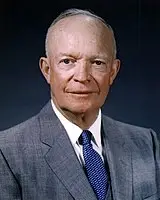
Dwight D. Eisenhower
January 20, 1953 – January 20, 1961
34
Dwight D. Eisenhower: The 34th President of the United States
Dwight D. Eisenhower was the 34th President of the United States, serving two terms from 1953 to 1961. He was a highly decorated military leader, serving as Supreme Commander of the Allied Forces in Europe during World War II, and he brought that experience to the White House as he navigated the country through some of the most challenging times of the Cold War. This article takes a closer look at the life and legacy of this iconic leader.
Early Life and Military Career
Dwight D. Eisenhower was born in Denison, Texas in 1890. He grew up in Kansas and attended West Point Military Academy, where he graduated in 1915. He went on to serve in a variety of military positions, including a tour of duty in the Philippines, before being promoted to the rank of General during World War II.
Eisenhower served as Supreme Commander of the Allied Forces in Europe during the war, and he was instrumental in planning and executing the Normandy invasion. He was known for his leadership skills and his ability to bring together a diverse group of military leaders, and he was widely credited with playing a key role in the eventual victory of the Allies.
Presidency
Eisenhower became President of the United States in 1953, at a time of great uncertainty and change. The country was in the midst of the Cold War, and tensions with the Soviet Union were high. Eisenhower brought his military experience and leadership skills to the White House, and he quickly set about restoring stability and security to the country.
Eisenhower is perhaps best known for his efforts to reduce tensions with the Soviet Union and to prevent the spread of communism. He helped to establish a number of key international agreements, including the Open Skies Treaty and the Atoms for Peace program, which aimed to reduce the threat of nuclear war. He also played a key role in the formation of the North Atlantic Treaty Organization (NATO), which remains one of the most important international alliances in the world today.
In addition to his foreign policy achievements, Eisenhower is also remembered for his efforts to improve the lives of Americans. He signed the Federal-Aid Highway Act of 1956, which created the modern American highway system, and he also established the National Aeronautics and Space Administration (NASA) to explore the potential of space. He is also credited with launching the modern conservative movement, as he sought to limit government spending and reduce the national debt.
Legacy
Dwight D. Eisenhower’s legacy is one of stability, leadership, and international diplomacy. He is remembered as one of the greatest Presidents in American history, and his impact on the country and the world continues to be felt today. He helped to guide the country through some of the most challenging times of the Cold War, and his efforts helped to establish the United States as a global superpower.