
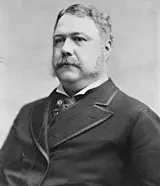
Chester A. Arthur
September 19, 1881 – March 4, 1885
21
Chester A. Arthur: The 21st President of the United States
Chester A. Arthur was the 21st President of the United States, serving one term from 1881 to 1885. Despite being in office for only a brief period, Arthur made significant contributions to American history and left a lasting legacy.
Early Life and Career
Chester A. Arthur was born on October 5, 1829, in Fairfield, Vermont. He was educated at Union College in Schenectady, New York, and later, at the National Law School in Ballston Spa, New York. After graduation, he established a successful law practice in New York City.
Arthur was a dedicated public servant and held several key positions in the federal government prior to his presidency, including serving as Collector of the Port of New York and as Quartermaster General of the New York State Militia.
Presidency
Arthur became President upon the death of James A. Garfield in 1881. During his presidency, he made significant contributions to American history, including the passage of the Pendleton Civil Service Reform Act, which aimed to reduce political patronage in the federal government.
Arthur was also a strong advocate for education and worked to increase funding for schools and colleges. He was a vocal supporter of the building of the transcontinental railroad, and worked to secure federal funding for the project.
Despite his accomplishments, Arthur’s presidency was marked by political turmoil and he was not nominated for re-election by his party in 1884.
Post-Presidency and Legacy
After leaving office, Arthur returned to his legal practice and continued to be active in the Republican Party. He died on November 18, 1886, at the age of 57.
Chester A. Arthur may not be as well-known as some of his contemporaries, but his legacy continues to have an impact on American history. He was a dedicated public servant and a champion of civil service reform, and his contributions to American education and transportation have left a lasting impact.
Today, Arthur is remembered as a president who stood up for what was right, even in the face of political opposition, and who worked tirelessly to promote American interests both at home and abroad. His legacy continues to inspire future generations of leaders, and his contributions to American history are an important part of our national story.