
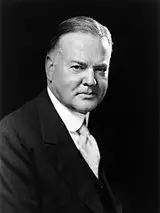
Herbert Hoover
March 4, 1929 – March 4, 1933
31
Herbert Hoover: A Look at the 31st President of the United States
Herbert Hoover was the 31st President of the United States, serving from 1929 to 1933. Despite his reputation as a lackluster president, Hoover was a man of great intelligence, determination, and compassion who left a lasting impact on American history. This article takes a closer look at the life and legacy of this often-misunderstood president.
Early Life and Career
Herbert Hoover was born in West Branch, Iowa in 1874. He was raised in poverty and was forced to work from a young age to support his family. Despite these challenges, Hoover was a talented and driven student who excelled in his studies. He went on to study at Stanford University, where he received degrees in geology and mining engineering.
After graduation, Hoover worked as a mining engineer in several countries, including China and Australia. He quickly rose through the ranks and became one of the most successful and respected engineers in the world. He eventually transitioned into politics and was appointed as the U.S. Secretary of Commerce under Presidents Warren G. Harding and Calvin Coolidge.
Presidency
Hoover became president in 1929, at the height of the Roaring Twenties. However, his presidency was soon overshadowed by the Great Depression, which began just months into his term. Despite his best efforts, Hoover was unable to stem the tide of the economic crisis, and his presidency became defined by widespread poverty, unemployment, and homelessness.
Hoover’s response to the Great Depression was widely criticized, with many accusing him of being out of touch with the needs of the American people. He believed that the economy would eventually recover on its own and that the government should not interfere. However, as the crisis worsened, he was forced to take action, signing the Smoot-Hawley Tariff and increasing government spending in an effort to stimulate the economy.
Despite these efforts, Hoover’s popularity continued to decline, and he was defeated in the 1932 election by Franklin D. Roosevelt. He left office with the country in the midst of the worst economic crisis in its history, and his legacy was forever tarnished by the Great Depression.
Legacy
Despite his reputation as a failed president, Herbert Hoover’s legacy extends far beyond his presidency. He was a man of great intelligence, determination, and compassion, and his contributions to American society extend far beyond his time in office.
Hoover was a prolific writer and author, publishing numerous books on topics ranging from mining engineering to political philosophy. He was also a philanthropist and humanitarian, working throughout his life to improve the lives of those in need. He played a key role in several relief efforts, including the Belgian relief effort during World War I and the rebuilding of China following a devastating earthquake.