
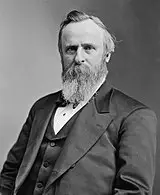
Rutherford B. Hayes
March 4, 1877 – March 4, 1881
19
Rutherford B. Hayes: A Look at the 19th President of the United States
Rutherford Birchard Hayes, born on October 4, 1822, in Delaware, Ohio, was the 19th President of the United States, serving from 1877 to 1881. Despite his short time in office, President Hayes left a lasting impact on American history and governance. This article will provide a detailed look into his life, presidency, and legacy.
Early Life and Career
Hayes was the son of a farmer and a teacher and was the fifth of eight children. He attended Kenyon College and then went on to study law at Harvard Law School, where he graduated in 1845. He then moved to Cincinnati, Ohio, to start his law practice.
Hayes was a man of many interests and talents. He was an accomplished orator, and he had a passion for education and the abolition of slavery. In 1852, he was elected to the Ohio State Senate, where he served two terms.
Civil War and Military Career
With the outbreak of the Civil War, Hayes left his law practice and joined the Union Army as a major. He quickly rose through the ranks and was soon promoted to the rank of brevet major general. He was wounded five times during the war and was known for his bravery and leadership.
Hayes’ military service earned him great recognition and respect, and after the war, he was elected governor of Ohio in 1867. He served three terms as governor and was known for his progressive policies, particularly in the areas of education and prison reform.
Presidency and Accomplishments
Hayes was nominated as the Republican candidate for president in 1876. The election was highly disputed, with both Hayes and his Democratic opponent, Samuel J. Tilden, claiming victory. After several months of controversy and a special electoral commission, Hayes was declared the winner and was inaugurated as the 19th President of the United States on March 5, 1877.
One of President Hayes’ most notable accomplishments was the end of Reconstruction in the South. He oversaw the withdrawal of federal troops from the South, which allowed for the return of self-governance to the states. This was a significant moment in American history, marking the end of the era of post-Civil War Reconstruction and the beginning of a new era of Southern self-rule.
In addition to his efforts to end Reconstruction, President Hayes also took steps to improve the economy and promote business growth. He signed the Agricultural Adjustment Act of 1877, which provided funding for agricultural research and education. He also signed the Compromise of 1877, which provided federal funds to build the transcontinental railroad and opened up the West for settlement and development.
Another significant accomplishment of President Hayes’ presidency was his support for civil service reform. He signed the Civil Service Reform Act of 1883, which established a merit-based system for selecting government employees and ended the practice of awarding government jobs based on political patronage.